I think this is a good example of a viral marketing campaign. In fact, the advertisement exactly captures the reasons why everybody will be likely to share this video with his friends, coworkers, etc....
The subject matter of the video (dirty stories in hotel rooms) is universal. It catches everybody's curiosity. Needless to say, the outfit of the actress is an essential component of the message itself.
The tone of the advertising is clever and ironic. Just after 10 seconds you'll find out that "dirty" is used in its literal meaning, out of any metaphor and regardless of the nuances suggested by the dramatic look of the actress.
And eventually, the punch line/call to action: check the list and send us your experience about dirty hotels. Well, I am sure that anybody who recently had a bad experience will be happy to be vocal about his complaints.
Therefore, if many people are following the suggestion, this collection of complaints is more than entertaining: it is useful information.
Perhaps, this is a good example of conversational marketing. I find this is gonna be an interesting evolution of the traditional viral campaigns. I believe that the main feature of this marketing strategy is to get the users to contribute directly to the message, acting as a "collective" testimonial. I am sure we will have to speak again about conversational marketing...


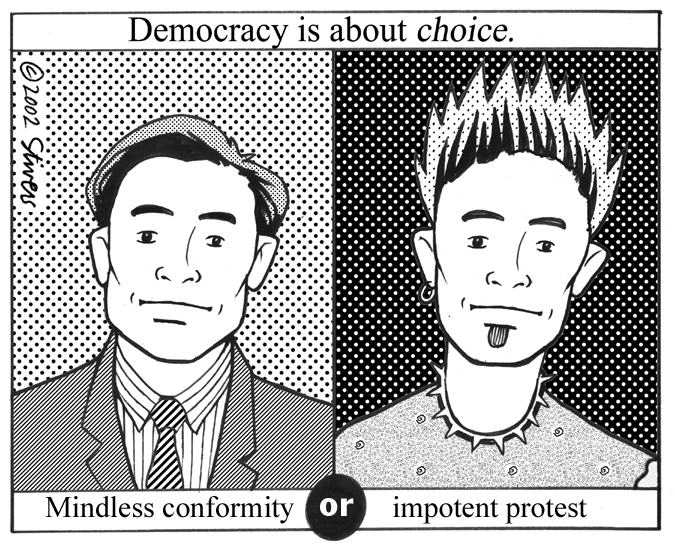
 Talking about marketing and brand identity, the debate of these days has been the following: what is the role of tag-lines in web 2.0. The issue is more than philosophical -- it is ontological... If we accept the concept that web 2.0 designates a participative community, where users define the tone, the content and the nature of the community, then we should reject the idea of having a tag-line to drive the community towards any preconceived end. This is the underlying idea of an authentic democratic community, where labels and tag-lines are disturbing the purity of the natural identity. Indeed, the community identity is never defined and continuously evolving, wherever the users are willing to take it.